Wednesday, 14 December 2016




Thursday, 8 December 2016
Carol Taaka
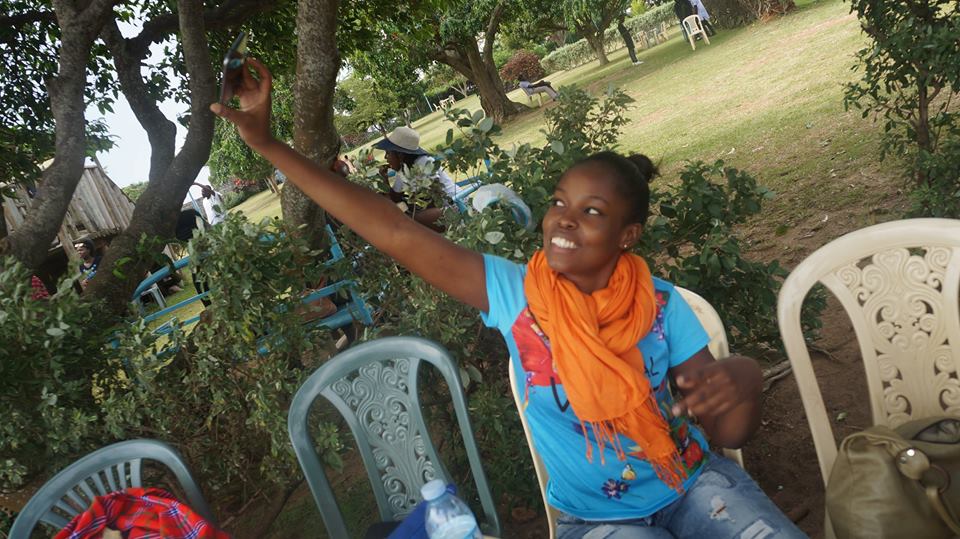
Travelling 300 kilometers away from Kampala our capital to meet Carol a 19 year old who looks like a 10 year old girl. She is living with sickle cell disease in Busia district at Uganda-Kenyan border town. Sitting down to have a chat her you realise the confidence she has.
When she was diagnosed with sickle cell at 16 years her parents and herself were told by community members that she will not live past 18 years.
"When I made 18 years it was a school day and I went to school but was absent minded. I was only waiting to die. I went back home and when I went to bed I never expected to wake up the next morning. The next day I woke up still alive and kicking. I was too excited to be alive. It was like another birthday and a new lease of life. Am still asking myself why did they have to give me a time limit" she teary speak.
In the area where she lives most girls are allowed to study the primary level and after they are married off. She is completing her primary level next year. Carol is just a year away from getting married.

Wednesday, 30 November 2016
Sickle Cell Warriors Beach Party
Save the date for the first Sickle Cell Warriors Beach party happening on 11th December 2016 at Sports Beach Entebbe. Lets come and meet other people with sickle cell disease. Get to know that you are not alone.
Come with your younger warriors, come with friends and spouses.
Entrance is 3,000/= payable at the beach gate.
We want you to have unlimited fun so everybody will manage own menu.
Come have fun, meet and greet.
For more information Call/Whatsapp 0779210960/0701288807
#unlimitedfun #Nopainatthebeach
For more information Call/Whatsapp 0779210960/0701288807
#unlimitedfun #Nopainatthebeach

Monday, 14 November 2016
Busia Sickle Cell Outreach
On Saturday (12th November 2016) Sickle Cell Network Uganda in partnership with Masaba Community Care Program a Community Based Organization conducted a sickle cell community outreach in Masaba Village, Masaba Sub County, Busia District in Eastern Uganda. Busia is a border district on Uganda-Kenya border, in Eastern Uganda. Eastern Uganda rank second with the highest rate of Sickle Cell Disease and Sickle Cell Trait Uganda according to the 2015 Uganda Sickle Cell Survey results.
The outreach involved a number of activities including sickle cell disease education, home care management training, counseling and free sickle cell screening. The outreach attracted over 200 people from Busia and Tororo district and even from across the border in Kenya. 87 people were screened of their sickle cell trait status.
Anyango Betty a resident of Tororo district said “I came from Tororo to come and get information about sickle cell disease. They tested me and found out that am a sickle cell trait carrier but I get pain like someone who has sickle cell disease. Am happy that I have gotten more information on sickle cell trait which is going to help me manage my pains”
Auma Christine a mother to two boys with sickle cell disease said “I have been always worried about my son bedwetting even at his age of 14. His young siblings stopped bedwetting many years ago. I have been stressing him to stop and did not know that it’s related to sickle cell. Since I have known I will just help him not to wet his bed without shouting at him.”
“My friend told me that there are going to teach us about sickle cell and I asked my mother to bring me here. Am happy that I have learnt a lot which I did not know before, especially concerning my reproductive health” Ouma Michael (16 years) a sickle cell patient from Bumala in Kenya.
Pastor Fredrick Masiga the head of Grace Mission Church Masaba pledged to take on the sickle cell awareness message to his church. Religious leaders influence much the public opinion.
Nabadda Martha the Health Educator and Promoter of Masaba Community Care Programme noted “It is always exciting for me and the Masaba Community Care Programme to have a team visit this local village! The people are overwhelmed with happiness when they learn that someone is at least concerned about their well-being. And hence respond efficiently when called upon. I was particularly amazed by the number of children who seemingly had SCD already. But was also encouraged by the diligence the adults showed when they attentively listened during the health talk and by the questions they asked.”
She also assured us that Masaba Community Care Program will continue to create sickle cell awareness in the community.
Many patients and caregivers decried the poor healthcare management which compels them to cross the border and seek treatment from neighboring Kenya. Busia has a district hospital which is few kilometers from Masaba.
There are many husbands who deny fathering children with sickle cell. We are hopeful that with the screening and knowing their status they would be able to own up and take care of their children.


Sunday, 13 November 2016
CAROL: AN 18 OLD WHO LOOKS LIKE 10 YEAR OLD GIRL
As I was handling a sickle cell answer and question session yesterday at our sickle cell outreach in Busia a young girl seated two benches away from where I was standing looked older than her size. The lady sitting in front of her was asking many reproductive health questions. My instincts told me she was asking on behalf of another person.
After the session I asked to have a one on one with the young girl. Lucky enough she had come with her mother.
Caroline Taaka is an 18 year old lady but she looks like a 10 year old girl. She is in primary six. Girls of her age are supposed to be Senior Six preparing to join University next year in August.
Caroline is one of those people with sickle cell disease who are gravely affected by delayed growth. A number of her fellow students and people from her village always ask her why does she look young than her little siblings. I asked how does she respond to them. She confidently said "Its God who made me the way I am that's what I answer them"
Though she is faced with challenge of defending herself, Carol is a confident lady.

Sunday, 25 September 2016
2nd Annual Sickle Cell Run
2nd Annual PSU Sickle Cell Run today at Kati Kati grounds organized by Pharmaceutical Society of Uganda in partnership with Sickle Cell Association of Uganda


Thursday, 15 September 2016
Men with sickle cell disease: Reproductive health and sickle cell Part 7
Always men are silent on matters concerning their health. There a few men who stand out to speak about health issues they face every day. Even in advocacy the voice of men despite having "bigger" voices are silent.
Reproductive health information gap has not been only for women but also men are affected too.
It’s more common to boys when they get to their puberty age to have their voices deepen. It’s a feature that many use as a tool to show that they are now grown up and assert their relevancy in the society.
It’s more common to boys when they get to their puberty age to have their voices deepen. It’s a feature that many use as a tool to show that they are now grown up and assert their relevancy in the society.
The deepening of voice in most male with sickle cell delay. Most male with sickle cell disease have delayed growth which affects their self-esteem."YOU CANNOT SIT ON THE TABLE OF MEN WHEN YOU ARE STILL A CHILD" that's the statement they always hear from their peers. At this time age does not matter it’s the characteristics you have that matter. Delay affects every aspect that concerns the sexual development including: enlargement of the scrotum, and testes, lengthening of the penis, enlargement of seminal vesicles and prostate gland, growth of pubic hair, growth of hair on face and in the underarms.
Sickle cell does not only bring the physical pain but also the psychological pain. It is only that the effect of mental health on the lives of people with sickle cell disease.
It’s surprising that even when the men’s voices finally deepen they remain silent about issues concerning them. Do you want women to speak on issues concerning you?
Friday, 9 September 2016
Freedom to parenting: Reproductive health and sickle cell Part 6
Getting a partner is what every person would like. In part 4
of my series reproductive health and sickle cell I encouraged people with
sickle cell disease to disclose their status to their partners. I have received
feedback from a number of my readers. It is difficult to disclose to a partner
whom you do not know whether will accept you as you are or not.
The first question most partners ask is ARE YOU ABLE TO TAKE
PART IN SEXUAL ACTIVITY? Those with sickle cell disease have been asked this
question several times. At times the answer is difficult but the answer is yes.
Sickle cell disease affects the red blood cells but doesn’t affect the sexual
ability of a person.
Forcing people to become parents has been condemned but
denying people with sickle cell their parenting right has been a silent issue.
Choosing to have a child is an unquestioned right, yet society insists that
people with sickle cell disease justify and defend their decision.
There are a number of misconceptions about people with
sickle cell disease. Misconception include that they are not sexually active,
asexual, uninterested in sex, unable to take part in sexual activity.
Many reproductive health care providers are unprepared to
discuss issues of fertility, conception and pregnancy with people living with
sickle cell disease.
For people with sickle cell disease their desire for freedom
to have sex and bear a child is no different than other people. Curtailing of
their freedom is a cause of crises to many.
Wednesday, 7 September 2016
Sickle Cell Network Uganda launched sickle cell clinic at Mityana General Hospital.
Joan Naziwa is a resident of Jingo village in Mityana districts, when her son presented signs of sickle cell disease she was referred to Mulago hospital for proper diagnosis. When he was diagnosed with sickle cell the doctors advised her to open up a patient’s file at the Mulago sickle cell clinic. She was further advised to come back after 3 months for a review. It is now 3 years and Joan has never returned to Mulago for any review. “I cannot manage the transport to Mulago” she said. From her village in Jingo to Mulago it’s a distance of 80 kilometres.
Joan is not alone other parents from Mityana and other districts who can not afford transport resorted to seeking treatment from private clinics and Mityana hospital where they could not get the treatment they need due to lack of medical officers who understands the management of sickle cell disease.
 |
| Sickle Cell Network team and medical officers from the hospital after the launch of the sickle cell clinic |
When Sickle Cell network Uganda learnt these difficulties in accessing services it partnered with Mityana General Hospital to start a sickle cell clinic. The sickle cell clinic which was launched and opened yesterday (5th September 2016) will offer all the services to sickle cell patients every Monday including new born screening to all babies born from the hospital.
Greater Mubende is one of the areas with many cases of sickle cell disease but patients have to travel to Kampala for treatment.
 |
| Barbra Najjuma 40 year old lady living with sickle cell disease |
“I know over 40 families in Mityana with sickle cell patients and they have been struggling to get treatment. Am sure with this sickle cell clinic the healthcare of people with sickle cell will improve” Barbra Najjuma who is a 40 years sickle cell patient said. She is also Women Councilor of people with disability of Mityana District.
 |
| Parents consulting doctors at the sickle cell clinic |
Mityana sickle cell clinic is the second clinic Sickle Cell Network Uganda has launched in a period of less than year. It comes after Atutur hospital sickle cell clinic which now has more than 700 registered patients serving the Teso Sub Region.
Sickle Cell Pregnancy: Reproductive health and sickle cell Part 5
Women look for happiness in having children and the process of getting children is through pregnancy. Even men are always happy to be fathers, being a husband alone is not enough to satisfy one’s soul.
For women with sickle cell getting pregnant is not a walk in the park. The Uganda 2002 National Anaemia Policy advises all women to seek information from hospitals about the complications of pregnancies. But how many in Uganda do it? Policies and their implementation will be a topic for another day.
To many parents who have adults daughters with sickle cell they discourage them from getting pregnant for fear of dying while holding that pregnancy. Many women with sickle cell become pregnant without first getting the information on the complications of pregnancy. This is because their parents and friends always discourage them, Who would not like to have the joy of having a baby? I think no one.
The reproductive freedom of adult women with SCD might be restricted because of their illness. A number of women with sickle cell have been forced to terminate their pregnancies not because it was too risky but only because they have sickle cell disease.
The closure of opportunities for people with sickle cell has forced them to get pregnant with little forethought or opportunity for well-informed reproductive health decisions.
Pregnant women with SCD are at risk for pregnancy-related complications such as bleeding, infection, hypertension, and preterm labor, and more sickle cell manifestations during pregnancy, such as worsening anemia and more frequent pain episodes.
Because women with SCD are at risk for pregnancy-related complications as well as the potential teratogenic effects of HU, contraception counseling is paramount to decreasing unplanned pregnancies
It is highly advisable that before any woman with SCD get pregnant she needs to first consult specialist and weigh in the problems vs benefits of becoming pregnant.
During the period of pregnancy you should visit both your antenatal and sickle cell clinic for proper management.
#redsmearmonth #sicklecellawarenessmonth
Monday, 5 September 2016
Sickle cell status disclosure: Reproductive health part 4
The politics of the sickle cell gene and relationship is one of the major challenges in sickle cell.
Almost every person who is battling sickle cell disease will tell you that they would not even want their enemy to experience the sickle cell pain. Every one would not want to bring to this world a child who will be in pain all their lives, the guilt that will haunt you for all your life.
The first step to prevent the birth of a child with sickle cell is knowing your genotype and that of your partner. You can only know when you disclose the status to your partner.
Adult men and women with sickle cell are confronted with the challenge of communicating their status to partners and deciding with their partners what their plans will be in advance of pregnancy.
You don't need to have the conversation too late for the sake of openness in the relationship or too early to avoid presumption of long term commitment early in the relationship. You need to repeat this type of communication as partners change throughout the child bearing years. Once partners have communicated about their sickle cell disease or trait status, the first decision maybe whether to have a baby a decision that may be influenced by the social network.
If a man or woman with sickle cell disease decide to have a baby and want to be certain that the baby does not have sickle cell disease a partner must have neither sickle cell disease or sickle cell trait or be aware of the advances in assisted reproductive technology and prenatal testing that are available to support this decision.
The woman also need to be fully aware of the potential physical consequences to herself during pregnancy.
#redsmearmonth #sicklecellawareness #SCAM2016
#redsmearmonth #sicklecellawareness #SCAM2016
Sunday, 4 September 2016
Vampire menses: Reproductive health and sickle cell part 3
Although menses onset is delayed in female with sickle cell disease, menstrual bleeding patterns are normal. An unfortunate feature of menstrual bleeding in women with sickle cell disease is its association with an increased sickle cell related pain rates. Increased sickle cell related pain occurs at different stages of menstrual cycle.
In people with sickle cell the red blood cells have a life span of 10-20 days compared to those without sickle cell which last for 120 days in the body. The body has to struggle and manufacture blood. On top of these losses the monthly menses vampires also suck blood.
The mean monthly in some people brings pain. It is more common among people with sickle cell to prepare themselves for the pain to come. For a number of ladies I have interacted with when that period of the month approaches they have to either stock painkillers or get their stuff ready for hospitalization. It feels awkward to be their waiting for pain which you have no control over.
"I have to spend 5 days a month in crisis due to my periods" one of my friends told me.
She has to struggle for 5 days a month in pain until when the periods ends. This translates into 60 days of pain annually. This discounts other crises.
She has to struggle for 5 days a month in pain until when the periods ends. This translates into 60 days of pain annually. This discounts other crises.
For ladies with sickle cell disease monthly pain should not be an item on your menu. You can always overcome your pain by eating a balanced diet. Invest in using blood boosters even when the vampire sucks your blood your HB does not drop.
Pain is not virtue.
#redsmearmonth #sicklecellawareness #SCAM2016
Pain is not virtue.
#redsmearmonth #sicklecellawareness #SCAM2016
Saturday, 3 September 2016
Sickle cell and reproductive health part 2 (Menstruation)
Information is power and whoever has the information has the power to make an informed decision. Limited reproductive health information for people living with sickle cell has made them vulnerable. Unlike other groups of people with chronic disease who receive appropriate reproductive information like HIV patients, sickle cell patients do not have the opportunity to receive the information they need.
Reproductive health information is not a “one shoe fits all” so each class of people has to receive information that fits that group. For example girls with sickle cell disease always have delayed menstruation periods compared to other girls. If a reproductive health educator don’t pass on this information to these girls they will be affected as they may think that they are abnormal.
Many girls with sickle cell disease have a more than one year of delayed menses. Everybody in this world wants to move at the same pace as peers. Nobody wants to be the last person. The frustration and long waiting causes trauma and psychological torture. Just imagine the school emphasizing that every girl of your age should come with sanitary towels enough for the school term. You carry the sanitary towels and don’t use them because you have not started. You return home with your pads. If someone counselled these girls and they get to understand how their bodies are different from other bodies.
#redsmearmonth #SCAM2016 #sicklecellawareness #sickleptember
#redsmearmonth #SCAM2016 #sicklecellawareness #sickleptember
Friday, 2 September 2016
Sickle cell and reproductive health part 1
For the last 2 decades of sickle cell advocacy in Uganda the emphasis has been put on management of the disease to reduce on the number of children who die every year.
In that field there has been a tremendous success and now we have many adults with sickle cell who have survived.
Because sickle cell was always referred to as an infant disease little emphasis has been put on adult care. The reproductive life and healthcare of people with sickle cell disease has not been included in most of the reproductive health programs.
Because sickle cell was always referred to as an infant disease little emphasis has been put on adult care. The reproductive life and healthcare of people with sickle cell disease has not been included in most of the reproductive health programs.
Its more common to speak to different players in the reproductive health and if you mention sickle cell their scripted response will be "we don't handle sickle cell people in our reproductive health programs"
There is still limited information on the experiences of people with sickle cell.
#redsmearmonth #SCAM2016 #sicklecellawareness
#redsmearmonth #SCAM2016 #sicklecellawareness
Tuesday, 10 May 2016
My story I would not want to share (THE JOURNEY TO ATUTUR THAT ALMOST NEVER HAPPENED) PART 1
 |
| A boy standing at a sign post near Atutur Hospital main get Photo Credit The Observer |
A week earlier we had received a telephone call from a
doctor in Atutur hospital Kumi district. She had identified herself as Dr.
Sarah. Dr. Sarah narrated to us how sickle cell was affecting many people who
attend Atutur Hospital. She had within a period of 3 weeks registered over 100
patients. Too puzzled she had decided to contact us for support.
We decided to go to Atutur and get firsthand experience of
what the doctor had narrated to us on phone. We made a request to Central
Public Health Laboratories (CPHL) to go with them and test these people they
had told us and also do a public free screening.
On August 8th 2015 we setoff for our Eastern campaign that
later became an Eastern question. At 5.33 pm the drive ignited the engine of
one of the cars in CPHL’s parking. It was an old car and needed disposal. We
drove to the nearest petrol station refueled and did some checkups. At 6.00pm
the driver who was in his 60s start to drive towards the East.
The journey was still wonderful I knew every place we were
passing by but I did not know Kumi where we were going. I had never been to
Kumi so I did not even know how long the journey was. At 8.00 pm we arrived in
Iganga Town. It was now getting darker and most shopped had been closed but
bars and pubs were just opening. The driver made a suggestion and wanted us to
spend a night in Iganga and travel to Kumi early in the morning. We did not
take his advice. My colleague insisted that we sleep in Mbale which was near
Kumi for easy access and time management. The driver accepted and continued
with the journey.
At Nakalama after branching off from Busia road, the
headlights beamed direct to a road sign which was alerting us that we were 100
kilometres away from Mbale. Before we could reach the signpost the driver
parked on the roadside. He told us that the car had developed a mechanical
problem which was going to be fixed and we continue with our journey. He looked
for a mechanic from the nearby garage to fix the car. 30 minutes passed with no
success. We were still praying and worried of our security since we were in a
dark place. He finally broke the bad news that the car could not be fixed,
there affected machine needed to be replaced and could only be bought from
Kampala which we had left 3 hours ago.
We had now two options either to sleep in Iganga or continue
and sleep in Mbale. We chose Mbale as earlier plans. Now desperate we got our
bags and sickle cell testing kits to look for a quick taxi to Mbale. We waited
for 15 minutes for a taxi and every taxi that came was full, some even had
excess passengers instead of 14 they had 18 passenger excluding children. Tired
of waiting and our legs had started to hurt we came back to rest in the car.
The mechanic advised us that if we needed to get to Mbale at night we had to
board a truck.
When a Fuso truck came he helped us to stop. We negotiated
the transport fares and got on board. The truck can accommodate 2 passengers
and a driver. Already 3 people were inside and our team was of 4 people.
My 3 colleagues had to occupy the two passenger seats. I was
the smallest so had to be sacrificed. There was drama on how we could also fit
inside. I was told to squat in the resting area behind the seats. I was there with the turnboy and another
passenger we met in the truck. I was also holding the 5 boxes of sickle cell
testing kits we had. The journey which we thought was going to end in Mbale
ended in Kumi where we arrived at 1am. I had to squat for 156 kilometres.
Watch out for the next part as I recollect how I had to
squat for 156 kilometres and the morning where we got lost and went to other 2
hospital before arriving at Atutur.
Thursday, 5 May 2016
Pause: My story I wouldn't want to share
I went to labour ward Tuesday to give birth to my triplets but I had labour pains for nothing. The doctors later told me that I was not due. I had my mama kit with me. I knew all the names I was going to give my newborn and same color clothes.
9 months ago I went for pregnancy test and tested positive. This was after missing my periods and suspected to be pregnant. The test proved what I thought.
The first antenatal clinic was not good. The gynecologist wrote in the clinical notes that my womb couldn't carry the triplet after the ultrasound scan which had showed that I had them. He put it in writing that I had to pay for each kilogram my babies weigh. He told me if I didn't agree to his decision I had only one chance and was to appeal to the Hospital head which was not easy.
I almost gave up. I was later advised to consult the doctor who was seated next to this gynecologist. I did the same. In fact he is the one who taught the other gynecologist and his supervisor. After consultations he accepted me to carry my triplets. I was happy to have the first decision quashed.
When I went to check at where I had kept my triplets as the gynecologist had advised I found out that the prices for keeping my lovely babies already too high now. I came back frustrated. I asked my friend to help me negotiate with the Lady and have the prices reduced. He accepted and he suggested to me that we give the one an offer for carrying the triplets for that time. The offer was to name one of them the name of the woman who carried them for that period. Fortunately the lady accepted and reduced the prices which we paid.
When I got them I informed the father of my triplets and he was happy. He was happy to be father again. He was father before but the mother of the first kids disappeared with the children and gave them different names.
Two and half weeks back the doctor told me that I was going to give birth on 3rd May. I started preparing and informed the father to be of my children.
I checked in the hospital with labour pains. Unfortunately I found the room also full and was told that it was overbooked. The labour pain mysteriously stopped. The triplets settled in the womb and now waiting for the next labour pains. I hope the pains will not be too much.
Sunday, 24 April 2016
Stella Nyanzi did not undress herself: she put Makerere University to a nude test.
On Monday a research fellow at Makerere Institute for Social Research removed her clothes protesting the locking of her office.
Many social commentators have refused to offer their opinion. I know those who support her actions have remained silent fearing to be negatively judged by the public. When I looked at the Monday incident i did not see it as a battle between Stella and Mamdani but as battle between those who want Makerere to be corrected and those who want it to remain in trenches.
Those people who are condemning Stella for her nude protest should remember that Makerere had a naked run where both girls and boys ran naked at night. Most people kept silent about it. If its women being nude that those who are against Stella is their issue for fighting her then you should walk around the Campus you will find that a number of girls put on clothes which has no difference with being naked.
A few weeks back a Professor at Makerere was arrested for raping a female student. The case disappeared in the last pages of the daily newspapers. I have seen no one raising the issue. I didn't see even women activists raising up to fight for this innocent female student. I was told of a female retaker who was in my class and I was told that she was retaking the paper for the third time because she had refused to have sex with the lecturer. When the student went to court and got an injunction for remarking. After a remark the student had in fact passed the paper.
I have seen the Makerere Convocation vocal in Stella vs Mamdani fight but have not been seeing their public contribution when the students are fighting the administration on the 100% fees policy.
We should not miss this opportunity when Makerere is undressed to transform it back and get to its correct position. I know her fight has woken up the conflicts at Makerere.
I have seen many people commenting and accusing Stella for showing the world her ugly body. If your conclusion was that the body was ugly then it means Makerere is ugly and needs make up.
I don't support her nude protest but since that happened already let's not lose the opportunity to bring back the glory of our beloved Makerere
Friday, 15 April 2016
Receiving drugs fro Emran Kakaire Fund
On the Evening of 14th April 2016 I received on behalf of Sickle Cell Network Uganda the first donation of 65 packets (100 tablets each) from Emran Memorial Fund handed over by Emran’s best friend and cheeky sister Rania (in photos). We are happy that 65 children will have enough supplies for three months without any worries.
Thanks to Emran's father Kakaire Ayub Kirunda and the family for the initiative.
 |
| Receiving drugs from Rania Kakaire |
Tuesday, 12 April 2016
Emran Kakaire Memorial Fund for Sickle Cell and education launched today.
 |
Emran Kakaire |
Today we would have been celebrating Emran Kakaire’s 7th birthday. But unfortunately he lost the battle to sickle cell disease in 2014. As a way of celebrating his life he lived his family has decided to start a fund Emran Kakaire Memorial Fund which is dedicated to the memory of Emran Kakaire Kirunda, who died on Aug.11, 2014, at just over 5 years of age. Emran was a lovely boy who much loved and valued fellow children starting with his little sister Rania Kakaire.
To continue with Emran’s spirit in a significant and lasting way, his father Kakaire Ayub Kirunda has established a fund seeded by a fraction of his salary.
The fund aims at offering:
• Partial scholarships every term to initially help 5 primary school children from disadvantaged families in the village of Wantunda in Jinja where Emran was laid to rest.
• Monthly supplies of folic acid tablets, through Sickle Cell Network Uganda, to an initial 65 children coming from disadvantaged families
Please like the Fund page to learn more
https://www.facebook.com/EmranKakaireMemorialFund/info/
https://www.facebook.com/EmranKakaireMemorialFund/info/
Monday, 11 April 2016
My story I would not want to share (THE YOUNG MAN WHO WAS TOO SMALL FOR TV)
The year was 2004 the worst year in terms of pain so far. I had just come back from home still nursing pain from a major crisis I had suffered. The feet were still paining and knees hurting. Coming back to catch up with school in Form 2 then, our Fine Art teacher had left home work which I could not finish because I had come back a day before handing in.
The tall and slim teacher came to class and asked everybody to show him the work has done. He came to my desk which was two desks from behind. My head was resting on the desk and tried to explain to him that I was from a major crisis. He insisted that I produce the work. He started to punch me in the head. He looked down to my feet and found that I was putting on open not boot shoes which were part of the school uniform. The Fine Art teacher ordered me to remove my shoes and walk out on bare foot. I never resisted and walked as he said. I had hope that the Deputy Head teachers would save me since they knew the reason why I was not in complete school uniform; that every time I put on boot shoes my feet sickled and swell.
I walked to their offices which were a stone throw away from our classroom. I found one of them in office and narrated to him my ordeal. He never gave me time to explain but chased me away. Feeling confused I walked away in tears on my bare foot on a ground with small stones piercing my feet which made my movement difficult.
 |
My feet that sickle
After failing to get someone who could advocate for me I decided to be my own advocate. Something I had to do for 4 and half years I spent in high school after that incident. But while as a child I used to listen to radio and there was a program which I tuned into immediately after school and the presenters were always defending the rights of people especially children. I grew up knowing that the defenders of human rights are journalists.
From the “bare foot” incident I resolved to become a journalist and dropped my engineering dream. I knew no one was going to defend the rights of people with sickle cell disease except a journalist. I saw my self as a journalist to do that job. I started on the journey to prepare myself become a journalist whose mandate shall be to defend the rights of sickle cell warriors.
After my high school waiting to join the University I gave a first shot at journalism. I went to Sembabule to try my luck at Hon. Sam Kutesa’s Radio, Mbabule FM. Going to the station was also not an easy task. Finally I got a slot to be interviewed. I had two programs to present in my mind, my first priority was health talk show as you know that’s what took me search for a career in journalism. The second choice was sports. I was told by the Programs Director who was interviewing me that there was no slot for health program. I decided to go for the second choice sports. One, two, three start he told me to start and he did the sound test. After the sound test I was told that my voice was not good. I left an angry young man.
"Never fear to enter any office because of your size" words from my uncle
Time came to apply for University studies and Mass Communication was my first choice. When the admission list was released my name was nowhere to be seen. I gave up on my dream to become a journalist. I decided to go business study.
In the second semester of my first year at the university I met Hon. Ibrahim Nganda Ssemujju by then he had just left The Observer newspaper and founded his monthly magazine The Education News. He asked me be the reporter from my university which I first refused because I had believed I was not supposed to be a journalist. I later accepted to do the work on freelance terms.
In 2012 May I was in my final semester at the university. Urban TV advertised the auditions for the next presenter (Rated Next Season I). I emailed my application and was invited for the screening. There was over 2,700 applicants for one position. My intentions were not to win but to try. I could not beat 2,700 people NO WAY.
My turn came and when got on the screen one of the judges told me that I was “too small”. I left without presenting the idea I had. I never got a chance to talk.
A year after I checked on my Facebook Sicklecell Drive Uganda and I had a message from Urban TV inviting me for a morning talk show Urban@Dawn to talk matters of sickle cell. I decided to confirm my attendance but was still remembering the “too small” incident. I never failed to try and give a TV interview a chance.
Early in the morning I went to the station and was told to wait from the lounge for the presenter to come and talk to me. After a couple of minute the host Mary Luswata appeared and greeted me. She told me how they had looked for someone to talk about sickle cell and could not find one. It was not visible in her eyes that I was going to be small. We entered the on air studio and did the interview. I remember it was towards World Sickle Cell Day (19th June).
Never fail to try. If I had not tried to go for a TV interview for the same station that had rejected me that I was small I would not have done other TV interviews.
|
Subscribe to:
Posts (Atom)